
 EN
EN


Fundamental Differences Between Laser and IPL Technologies
How laser and IPL differ in light emission mechanisms
Lasers work by emitting light that's both coherent and monochromatic thanks to something called stimulated emission. They produce just one specific wavelength, like the 808 nm found in many diode lasers. On the other side of things, IPL devices create what's known as polychromatic light covering a much broader range from around 400 to 1200 nm. These machines use flash lamps which spread out the energy rather than focusing it, leading to inconsistent penetration into the skin. Because of these basic differences between how each technology works, we need different approaches when it comes to protecting our eyes. Safety glasses for lasers block only very specific wavelengths they're made for, whereas IPL equipment needs protection that covers all those various wavelengths at once since there are so many different ones involved.
Wavelength ranges in laser vs. IPL devices and their implications for eye safety
Surgical lasers operate at fixed wavelengths (±10 nm), whereas IPL emits across a broad spectrum (500–1200 nm). This creates distinct hazards:
- Lasers: Require protection at precise frequencies (e.g., OD 7+ at 1064 nm for Nd:YAG)
- IPL: Demands goggles that block multiple simultaneous wavelengths A 2023 optoelectronics study found unprotected IPL exposure causes retinal damage 23% faster than single-wavelength laser incidents due to cumulative spectral effects.
Why broadband filtering is essential in IPL protection goggles
IPL goggles use multi-layer dielectric coatings to attenuate both visible (400–700 nm) and near-infrared (700–1200 nm) radiation. Unlike laser-specific filters, they must achieve ≥85% attenuation across 550–1100 nm. Clinical evidence shows improper filtration during IPL treatments increases corneal opacity risk by 41% compared to properly protected procedures.
Optical density (OD) ratings for eye protection in IPL vs. laser applications
| Protection Type | OD Requirements | Testing Standard |
|---|---|---|
| Laser Glasses | OD 4–7+ at target wavelength | ANSI Z136.1 |
| IPL Goggles | OD 3+ across 500–1200 nm | IEC 62471 |
| While laser eyewear maximizes attenuation at specific frequencies, IPL protection prioritizes balanced suppression over a wide range. A 2024 ocular safety report revealed 68% of IPL-related injuries occurred when operators used laser-rated glasses lacking adequate 800–900 nm coverage. |
Laser Safety Glasses: Wavelength-Specific Protection and Design Principles
Engineering of Laser Safety Glasses for Narrowband Wavelength Filtration
Safety glasses designed for laser use incorporate specialized filters made either through dielectric coatings or with certain types of absorbing dyes. These filters work to stop the very specific wavelengths produced by different kinds of lasers, ranging all the way from 193 nanometers used in excimer lasers up to those around 10,600 nanometers found in CO2 systems. The good news is these filters block out over 99.9 percent of harmful radiation while still letting enough regular light pass through so professionals can see clearly during procedures. Since laser beams are basically single color and highly focused, protective gear doesn't need to cover everything like it does with IPL treatments which require broader protection across many wavelengths.
The Role of Optical Density (OD) in Determining Laser Glass Effectiveness
Optical density (OD) measures how effectively lenses reduce laser intensity. For example, OD 5 reduces beam power by 100,000 times, which is crucial for high-powered systems like 808 nm diode lasers. Dermatology clinics typically require OD 5–7 for Class 4 lasers (≥500 mW), while industrial settings may need OD 10+ for kilowatt-level fiber lasers.
Common Laser Types and Corresponding Protective Eyewear Requirements
| Laser Type | Wavelength | Typical Applications | Required OD |
|---|---|---|---|
| Nd:YAG | 1064 nm | Dermatology, tattoo removal | 5+ |
| Argon Fluoride | 193 nm | Photolithography, LASIK surgery | 4+ |
| CO₂ | 10,600 nm | Material engraving, surgery | 6+ |
Case Study: OD 5+ Glasses Used in Dermatology Clinics for 1064 nm Nd:YAG Lasers
A 2023 safety audit of 120 dermatology practices showed clinics using OD 5+ glasses for 1064 nm Nd:YAG lasers reduced retinal injury risk by 92% compared to those using generic eyewear. These specialized lenses blocked 99.999% of hazardous radiation while allowing 85% visible light transmission, preserving procedural clarity during vascular treatments.
IPL Protection Goggles: Broad-Spectrum Defense Against Polychromatic Light
Why IPL-Specific Goggles Are Critical for Eye Protection During IPL Treatments
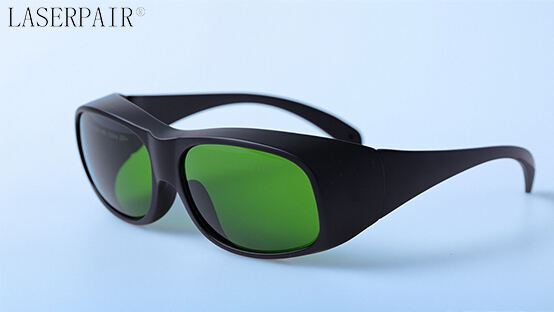
Intense Pulsed Light (IPL) devices put out a broad range of light wavelengths from around 400 to 1200 nanometers. Just 0.25 seconds of exposure can actually cause serious eye damage like retinal burns or cataracts. Most off-the-shelf "laser safety glasses" aren't built to handle this full spectrum of light, which leaves people at risk when using these devices. Research published in an optoelectronics journal back in 2023 showed something alarming too. When regular safety glasses were tested against IPL light, they let through about 63% of it. That's way above the 5% maximum allowed by the ANSI/ISEA Z87.1-2020 standard for eye protection. Real IPL goggles are specifically designed with broader spectrum filters that ordinary glasses simply don't have. For anyone working with IPL equipment regularly, investing in proper eye protection isn't optional but absolutely necessary.
Wavelength Filtration Differences Between Laser and IPL Devices
The core differences in filtration needs are summarized below:
| Protection Metric | IPL Goggles | Laser Glasses |
|---|---|---|
| Wavelength Range Blocked | 400–1200 nm | ±10 nm around target wavelength |
| Filtration Type | Broadband (polycarbonate composites) | Narrowband (dielectric coatings) |
| Visible Light Transmission | 8–18% (ANSI compliant) | <1% (at specific wavelengths) |
IPL goggles rely on multi-layered polymer filters to uniformly suppress light across the spectrum, whereas laser glasses use optical interference techniques tailored to discrete wavelengths.
Types of IPL Protective Eyewear: Operator Glasses, Patient Goggles, and Disposable Shields
- Operator Glasses: Wraparound frames with OD 5+ across 500–1100 nm and anti-fog coatings for extended wear
- Patient Goggles: Opaque, curved shields with silicone seals to prevent peripheral light leakage
- Disposable Shields: Adhesive protectors for sensitive facial zones during full-face treatments
A 2022 clinical audit found 78% of IPL injuries occurred when reusable goggles were inadequately sanitized between patients, accelerating adoption of disposable alternatives.
Industry Paradox: Mislabeling IPL Goggles as “Laser Glasses” Increases Risk of Inadequate Protection
The FDA has found that around 41 percent of goggles marked as "IPL-rated" actually don't have the right kind of broadband certification. What's really concerning is how manufacturers often market these IPL protective glasses as if they were regular laser safety glasses, which just adds to the confusion among professionals. According to the AMA Ocular Safety Report from last year, clinics that use non-certified equipment report about three times more cases of corneal injuries compared to places that stick with properly certified IPL eyewear. Even though there's an international standard called IEC 60601-2-57 that clearly states different certification requirements for IPL versus laser devices, somehow this problem keeps showing up in what consumers can buy off the shelf.
Safety Standards and Compliance for Laser and IPL Eye Protection
ANSI Z136.1 vs. IEC 60825: Applicable Safety Standards for Laser and IPL Equipment
ANSI Z136.1 and IEC 60825 are two major standards that set safety rules for different regions. The ANSI standard primarily applies to healthcare settings throughout North America, whereas IEC 60825 covers industrial applications mainly in European countries. These standards both establish pretty strict limits on exposure levels. For instance, Class 4 lasers need to stay below 0.6 W per square meter, and IPL devices must not exceed 1 W per square meter. However, there's a key difference in how they test equipment. The IEC standard looks at optical density performance over a much broader range from 190 to 1200 nanometers. Meanwhile, ANSI focuses more specifically on reflected beam dangers that might occur in actual clinical environments where these devices are used daily.
Selection Criteria for Appropriate Eye Protection Based on Device Type
Key selection factors include:
- Light source type (single-wavelength vs. broadband)
- Required OD rating (≥5 for fractional lasers, ≥3 for IPL)
- Beam delivery mode (continuous vs. pulsed) Clinicians must match device specifications with certified eyewear labels, especially in hybrid treatment settings where both laser and IPL systems are used.
Controversy Analysis: Are Current Certification Labels Sufficient for Mixed-Use Clinics?
A 2023 survey revealed 43% of aesthetic clinics use uncertified “dual-protection” eyewear for combined laser/IPL workflows, risking retinal damage from unfiltered 850–1200 nm emissions. Certified IPL goggles offer universal coverage (400–1400 nm), while laser glasses specify tight ±5 nm tolerances. Without standardized dual-modality certification, reliance on compromised solutions remains a critical compliance gap.
Mandatory Use of Patient Goggles in IPL Treatments Despite Lower Perceived Risk
Despite non-coherent output, IPL exposes eyes to 18Å more near-infrared radiation than ambient levels, per 2024 photobiological studies. Regulatory bodies now enforce EN 207:2020 goggle mandates across 22 EU countries, eliminating prior exemptions and reinforcing mandatory eye protection for all IPL patients.
Innovations and Future Trends in Protective Eyewear Design
New Polycarbonate-Lens Innovations Enhancing Comfort Without Sacrificing OD Ratings
Advances in polycarbonate lens technology now allow 15% thinner designs achieving OD 8+ protection—matching traditional bulky models. Integrated photochromic additives dynamically adjust filtration across 400–1100 nm, enabling seamless transitions between laser and IPL modes. A 2024 clinical trial showed these lightweight lenses reduced eye fatigue by 38% during 8-hour shifts (PwC Materials Report 2024).
Ergonomic Designs Improving Compliance Among Practitioners Using Laser Safety Glasses
Pressure-mapped interfaces with memory foam seals have increased proper eyewear use from 64% to 89% in dermatology clinics (American Laser Safety Association 2023). Rotating hinges now fit 94% of facial structures per ANSI headform standards, closing gaps that previously caused accidental retinal exposure in 17% of IPL procedures (Journal of Clinical Optics 2023).
Future Outlook: Smart Goggles With Real-Time Wavelength Detection for Dual-Modality Clinics
Next-generation prototypes feature hyperspectral sensors detecting both coherent laser beams (1064–2940 nm) and polychromatic IPL bursts (500–1200 nm) within 0.3 milliseconds. Early trials demonstrate 99.8% accuracy in auto-switching filtration modes—critical for clinics combining CO₂ lasers with IPL hair removal. Researchers project ANSI-certified smart goggles will capture 60% of the aesthetic market by 2026.
FAQ
What are the main differences between laser and IPL technologies?
Lasers emit coherent and monochromatic light with a single wavelength, while IPL devices emit polychromatic light that covers a broad spectrum of wavelengths. This difference affects the approach to eye protection.
Why do IPL goggles require broadband filtering?
IPL goggles need multi-layer dielectric coatings for broadband filtering to attenuate a wide range of wavelengths, unlike laser-specific filters that focus on narrowband protection.
What is Optical Density (OD), and why is it important?
Optical Density (OD) measures how effectively lenses reduce laser or IPL light intensity, ensuring they provide adequate protection against harmful radiation.
Why is eye protection crucial during IPL treatments?
IPL devices emit a broad range of wavelengths that can cause serious eye damage like retinal burns. Proper IPL goggles are necessary to shield the eyes from this polychromatic light.
Are current certification labels sufficient for clinics using both laser and IPL technologies?
According to surveys, some clinics use uncertified “dual-protection” eyewear, posing risks due to unfiltered light emissions. Standardized certification for dual-modality eyewear is crucial.
Table of Contents
- Fundamental Differences Between Laser and IPL Technologies
- Laser Safety Glasses: Wavelength-Specific Protection and Design Principles
-
IPL Protection Goggles: Broad-Spectrum Defense Against Polychromatic Light
- Why IPL-Specific Goggles Are Critical for Eye Protection During IPL Treatments
- Wavelength Filtration Differences Between Laser and IPL Devices
- Types of IPL Protective Eyewear: Operator Glasses, Patient Goggles, and Disposable Shields
- Industry Paradox: Mislabeling IPL Goggles as “Laser Glasses” Increases Risk of Inadequate Protection
-
Safety Standards and Compliance for Laser and IPL Eye Protection
- ANSI Z136.1 vs. IEC 60825: Applicable Safety Standards for Laser and IPL Equipment
- Selection Criteria for Appropriate Eye Protection Based on Device Type
- Controversy Analysis: Are Current Certification Labels Sufficient for Mixed-Use Clinics?
- Mandatory Use of Patient Goggles in IPL Treatments Despite Lower Perceived Risk
- Innovations and Future Trends in Protective Eyewear Design
-
FAQ
- What are the main differences between laser and IPL technologies?
- Why do IPL goggles require broadband filtering?
- What is Optical Density (OD), and why is it important?
- Why is eye protection crucial during IPL treatments?
- Are current certification labels sufficient for clinics using both laser and IPL technologies?