
 EN
EN



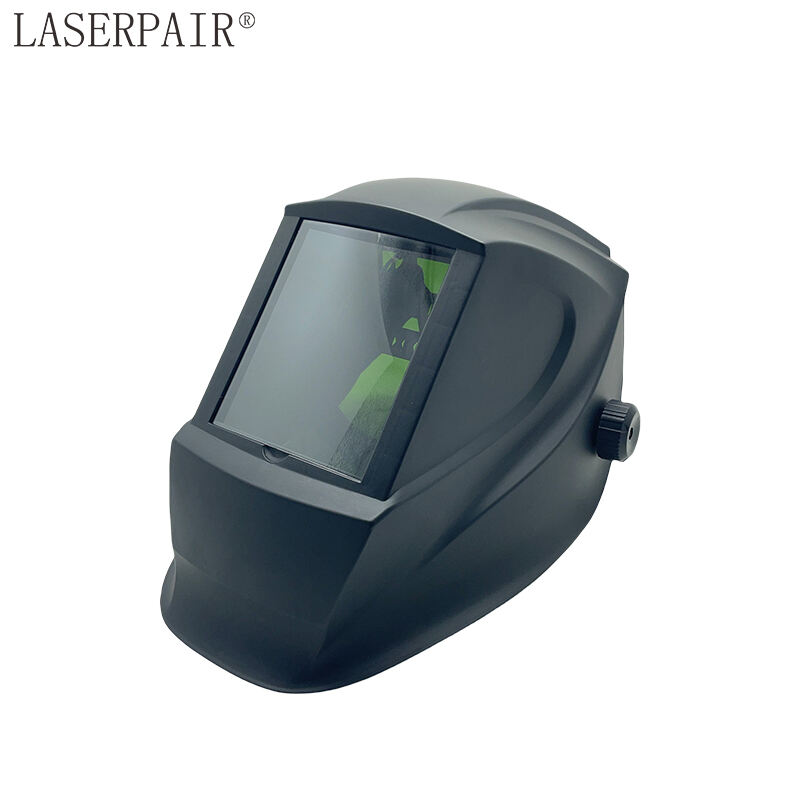
Core Protection Principles of Laser Protection Helmets
Understanding the Purpose and Protection Scope of Laser Welding Helmets
Laser welding helmets serve as crucial safety gear for workers dealing with intense light exposure during welding operations. These aren't just regular glasses though. They cover the whole face area and come equipped with special filters that block out harmful laser rays whether they're coming straight on or bouncing off surfaces. The protection works across all wavelengths including those invisible ones we can't see like infrared and ultraviolet light. What makes them really useful is how they still let welders see what they're doing clearly enough to perform detailed tasks without compromising their vision safety.
Optical Density (OD) Ratings for Effective Laser Attenuation
The optical density or OD value tells us how well a helmet can block laser energy from passing through it. The higher the OD number, the better the protection against harmful laser light. For instance, helmets rated at OD 5 stop around 99.999% of laser radiation, which meets the safety standards set by ANSI Z136.1 for Class 4 lasers. When we look at OD 6 rated gear, it cuts down on transmitted energy to about 0.0001%, something really important when workers need to protect their eyes from extended exposure to powerful laser systems. Most safety experts will tell anyone working with these devices that getting the right OD rating for the specific laser being used isn't just recommended it's absolutely necessary for proper eye protection in industrial settings.
Wavelength-Specific Protection (1070 nm) in High-Powered Environments
Most industrial fiber lasers work around the 1070 nm mark, which means workers need protective gear with filters set exactly for that infrared wavelength. The special lenses in these helmets do double duty blocking dangerous radiation without making everything look blurry or washed out. They cut down on annoying glare too, and get rid of those bright spots that make it hard to see what's going on during operations. On assembly lines where big 3 to 6 kW lasers are common, getting the right filter matters a lot. Safety comes first obviously, but there's another reason manufacturers care so much about this stuff. When the filtering isn't spot on, welds just don't turn out right, leading to costly mistakes and rework down the line.
Protection Against Infrared and Ultraviolet Laser Radiation
Multi-layer coatings in high-performance helmets attenuate over 99.9% of IR radiation (1,200–1,400 nm) and 99.7% of UV radiation (200–400 nm), protecting against corneal heating, cataracts, and surface eye tissue damage. Third-party testing confirms this dual-spectrum defense mitigates both immediate injuries and long-term ocular degeneration.
Compliance with International Safety Standards (ANSI, EN207, EN166)
Certified helmets adhere to rigorous international standards:
- ANSI Z87.1: Ensures impact resistance and optical clarity
- EN207: Mandates wavelength-specific attenuation under real-world conditions
- EN166: Verifies full-face coverage and peripheral sealing
Facilities using EN207-compliant helmets reported an 82% reduction in laser-related injuries compared to non-certified alternatives, highlighting the importance of standardized performance across diverse industrial applications.
Advanced Optical Technologies in Laser Protection Helmets
Auto-Darkening Lens Technology for Dynamic Exposure Control
Modern auto darkening lenses react incredibly fast, around 0.1 milliseconds actually, to changes in lighting conditions. They switch from being completely clear (shade 3) all the way up to maximum protection level (shade 13) almost instantly. This kind of quick response gets rid of those risky time gaps we see with traditional manual shields. The difference is really noticeable when dealing with high power pulsed lasers above 5 kW where every fraction of a second matters. According to recent studies published last year on laser safety protocols, today's advanced models incorporate smart sensors along with adjustable filters that keep eyes protected throughout the entire work process without causing any interruptions or distractions for operators.
True Colour Technology in Lenses for Enhanced Visibility
Modern helmets incorporate spectral filtering that preserves up to 95% of natural color perception, significantly improving contrast between materials and surroundings. This advancement reduces eye fatigue and enhances precision, offering a major improvement over traditional green-tinted lenses that distort hues and compromise depth perception.
Response Time and Clarity in Optical Filtering Systems
Top-tier optical systems activate in less than 1 microsecond–fast enough to block nanosecond laser pulses before retinal exposure occurs. High-resolution polymer substrates limit optical distortion to under 1 arcminute, enabling accurate beam tracking and fine-detail visualization without sacrificing safety.
Real-Time Filtering of Kilowatt-Level Laser Beams
DSPs can process incoming light intensity measurements as often as 10,000 times every single second. This enables adjustments to filter performance in real time for lasers operating at power levels reaching 50 kilowatts. The specialized neutral density filters work to stop what's called "vision bleaching" caused by those strong infrared emissions. At the same time, these filters maintain clear visibility of the molten weld pool during operation. This combination proves extremely valuable in industrial environments where high power laser systems are regularly used for welding applications across manufacturing sectors.
Design and Durability: Full-Face Coverage and Impact Resistance
Integrated Facial Protection Beyond Standard Laser Eyewear
Laser safety helmets provide full face protection from all sorts of dangers that regular goggles just can't handle properly. Think about things like stray laser beams, flying bits of hot metal, or random debris getting thrown around during work. These helmets are built with those super tough polycarbonate shields on front plus strong chin guards underneath. What makes them really good is this wide field of view covering almost 180 degrees around the sides. Most models come in at under 600 grams too, so workers don't get weighed down after wearing them all day long. The design manages to keep people safe without making their heads ache from constant wear.
Impact Resistance Standards for Personal Protective Equipment (PPE)
Premium safety helmets that meet ANSI Z87.1 and EN166 standards can handle impacts as strong as 6.5 Joules, which is really important around those automated systems that sometimes fail mechanically. The shells made with carbon fiber stay intact even after being exposed multiple times to temperatures reaching 150 degrees Celsius. According to recent findings published in the 2023 Laser Safety Report, workers wearing these tough helmets experienced a dramatic drop in facial injuries during high power welding operations, cutting incidents down by roughly 72 percent compared to older models.
Key Differences Between Laser and Arc Welding Helmets
Structural and Optical Design Variances for Distinct Hazards
Welding helmets designed for lasers versus those made for arc welding actually face completely different dangers. Arc welding gear mainly deals with super bright visible light ranging from around 4,000 to 15,000 lux through these automatic darkening filters we call ADFs. Laser welding helmets need something totally different though they have these special multi layer optical density filters that block specific infrared and ultraviolet wavelengths. According to some recent industry safety data from 2024, nearly three quarters of all welding related injuries happened because workers were wearing the wrong kind of helmet for the job at hand. That statistic really highlights why getting the right protective equipment matters so much in real world situations.
Why Arc Welding Helmets Fail Under Laser Welding Conditions
Standard arc welding helmets just don't cut it when it comes to proper laser protection. Tests show these helmets let through around 34% of that pesky 1070 nm infrared radiation under EN 207 standards. Most folks don't realize this because they're designed to respond to changes in visible light, not the constant beams from industrial lasers. And here's where things get really serious: even brief exposure to just 50 mW per square centimeter of IR laser light can fry eyesight permanently in under two seconds flat. That means regular arc helmets are basically useless against modern laser equipment, putting workers at real risk if they think their old welding gear will protect them during laser operations.
Case Study: Accidental Exposure Due to Incorrect Helmet Use
According to an OSHA report from 2023, a factory where workers wore arc welding helmets during laser operations saw some serious problems. Over just 18 months there were 17 instances of photokeratitis, which is basically sunburn of the cornea, plus three workers suffered permanent damage to their retinas. Tests later found these helmets only stopped about two thirds of the harmful 1064 nm light waves coming through. That's way short of what safety standards demand - they need at least 99.999% protection according to ANSI guidelines. The company ended up paying a $740,000 fine as recorded by the Ponemon Institute. This shows just how costly it can be when businesses cut corners on protective equipment selection, both in terms of worker health and bottom line expenses.
Preventing Eye Damage with Proper Laser Protection Helmets
Mechanisms of Retinal Injury from Infrared Laser Light
Infrared laser light at 1070 nm penetrates ocular tissues with 94% efficiency, focusing thermal energy directly onto the retina. This causes immediate photocoagulation and cell death in the macula, while repeated low-level exposure accelerates age-related macular degeneration through cumulative photochemical damage.
Role of Optical Density in Preventing Acute and Chronic Eye Damage
Helmets with OD ratings of 5–7 block 99.999% to 99.9999% of laser energy, providing robust protection against both instantaneous burns and long-term ocular pathologies. Models compliant with EN207:2022 maintain consistent attenuation across 800–1100 nm wavelengths, reducing the risk of significant vision loss due to under-specification.
Data Insight: Rise in Occupational Laser Injuries Due to Inadequate PPE
Looking at manufacturing incident reports from 2023 shows something worrying: there was a 22 percent rise in retinal injuries that could have been prevented if workers had worn proper eye protection. Studies show regular arc welding helmets let through almost twice as much infrared light (specifically 157%) compared to those designed for lasers when operating at 1 kW power. Real world observations back this up too. Workers wearing full face laser helmets face just 11% of the acute injury risk compared to those relying only on safety glasses when working with high powered equipment. These numbers highlight why investing in appropriate protective gear makes such a difference on factory floors.
FAQ Section
Why do laser welding helmets cover the entire face?
Laser welding helmets cover the whole face to protect workers from harmful laser rays and other debris during welding operations.
How important is the OD rating in laser helmets?
The OD rating is crucial as it indicates the helmet's ability to block laser energy and prevent eye damage.
Are arc welding helmets suitable for laser welding?
No, arc welding helmets do not provide adequate protection against laser radiation.
Table of Contents
-
Core Protection Principles of Laser Protection Helmets
- Understanding the Purpose and Protection Scope of Laser Welding Helmets
- Optical Density (OD) Ratings for Effective Laser Attenuation
- Wavelength-Specific Protection (1070 nm) in High-Powered Environments
- Protection Against Infrared and Ultraviolet Laser Radiation
- Compliance with International Safety Standards (ANSI, EN207, EN166)
- Advanced Optical Technologies in Laser Protection Helmets
- Design and Durability: Full-Face Coverage and Impact Resistance
- Key Differences Between Laser and Arc Welding Helmets
- Preventing Eye Damage with Proper Laser Protection Helmets