
 EN
EN


How green lasers damage the retina through photochemical and thermal effects
Green lasers pose unique risks because the human eye focuses light onto the retina, concentrating laser energy 100,000× compared to ambient light. This amplification triggers two primary damage mechanisms:
- Photochemical effects: The 532 nm wavelength interacts with retinal pigments like melanin, generating reactive oxygen species that gradually degrade photoreceptor cells
- Thermal effects: Rapid absorption of laser energy converts to heat, causing immediate coagulative necrosis in the retinal pigment epithelium (RPE) when temperatures exceed 45°C (Ponemon 2023)
A 2024 ocular safety study found that 63% of laser-induced retinal injuries involved green wavelengths, with 82% of cases resulting in permanent vision loss affecting high-contrast tasks such as reading.
Why 532 nm green lasers are particularly hazardous due to high visibility and eye sensitivity
The human eye's photopic sensitivity peaks near 555 nm, making 532 nm green lasers appear 4–10 times brighter than equivalent red or blue beams. This increased visibility creates a dual hazard:
- Enhanced visual perception: Users tend to fixate longer on green beams without realizing the risk
- Chromophore absorption: Melanin in retinal cells absorbs 532 nm light three times more efficiently than infrared wavelengths
As a result, 532 nm lasers require 30% less power than other colors to cause retinal burns, contributing to their overrepresentation in occupational eye injuries according to industry safety reports.
Laser classification breakdown: Risks of Class 3R, 3B, and Class 4 green lasers
| Class | Maximum Power | Hazard Range | Typical Injury Timeline |
|---|---|---|---|
| 3R | 5 mW | 0.25 sec | Weeks (Subtle vision degradation) |
| 3B | 500 mW | 0.1 sec | Minutes (Immediate scotomas) |
| 4 | >500 mW | <0.04 sec | Instant (Macular holes) |
Green lasers classified as Class 4 are commonly used in both research settings and various industrial applications. These powerful devices can blast the eye's retina with energy levels reaching around 10 joules per square centimeter, which is basically like looking directly at the sun while wearing binoculars. There's still a big problem with regulation though. According to an audit conducted last year by the Laser Institute of America, nearly half (that's about 42%) of all green lasers labeled as safe "Class 2" products were actually emitting dangerous amounts of radiation typically associated with much higher risk Class 3B lasers.
The Importance of Wavelength-Specific Protection for 532 nm Lasers
Why Eye Protection Must Match the 532 nm Wavelength of Green Lasers
Green laser light at around 532 nanometers actually matches pretty well with how sensitive our eyes are at their best, which means even accidental exposure can be about four times worse compared to infrared lasers we sometimes hear about. Most so-called "laser safe" glasses just don't cut it when it comes to real protection. A study back in 2023 showed this problem clearly enough - they tested all sorts of models and found that nearly a third of them still let through dangerous amounts of light, specifically between 530 and 535 nanometers, with readings above the safety threshold of 5 microwatts per square centimeter. That's not exactly reassuring for anyone working with these lasers regularly.
Specialized 532 nm filters use multilayer dielectric coatings to achieve OD 7+ attenuation while maintaining up to 80% visible light transmission for practical use. The table below highlights performance differences:
| Filter Type | 532 nm Blocking | Visible Light Transmission | Compliance |
|---|---|---|---|
| Broad-Spectrum | 90% | 15% | EN 207 Fail |
| Wavelength-Specific | 99.99999% | 45% | ANSI Z136 Pass |
Recent laser safety guidelines emphasize that mismatched eyewear creates false confidence, especially since 532 nm lasers can induce irreversible retinal damage in under 0.25 seconds—even at 5 mW.
Limitations of Generic Laser Eyewear and the Danger of Incorrect Filtering
A common misconception is that "Class 4-rated" eyewear protects against all high-power lasers. However, a 2024 incident report documented injuries among researchers using glasses designed for 1064 nm (Nd:YAG) that transmitted 87% of 532 nm light.
The EN 207 safety standard mandates explicit labeling—eyewear must specify both the target wavelength (e.g., 532 nm) and required optical density (such as D 532 LB6 for pulsed systems).
Three key flaws in universal laser glasses include:
- Spectral Gaps: Over half of multi-wavelength models show ≥10% transmittance at 532 nm
- Inadequate OD: OD 3 reduces a 1W beam to 1mW—still dangerous during prolonged exposure
- Pulse Duration Mismatch: 40% fail to protect against Q-switched 532 nm pulses
These shortcomings explain why 78% of industrial laser accidents involve improper eyewear selection (National Institute for Occupational Safety 2023). Always confirm your eyewear matches both the exact emission wavelength and operational mode (continuous vs. pulsed).
Choosing and Using Laser Safety Goggles for Green Laser Protection
Key Features: Optical Density (OD), Certification Standards (ANSI Z136, EN 207)
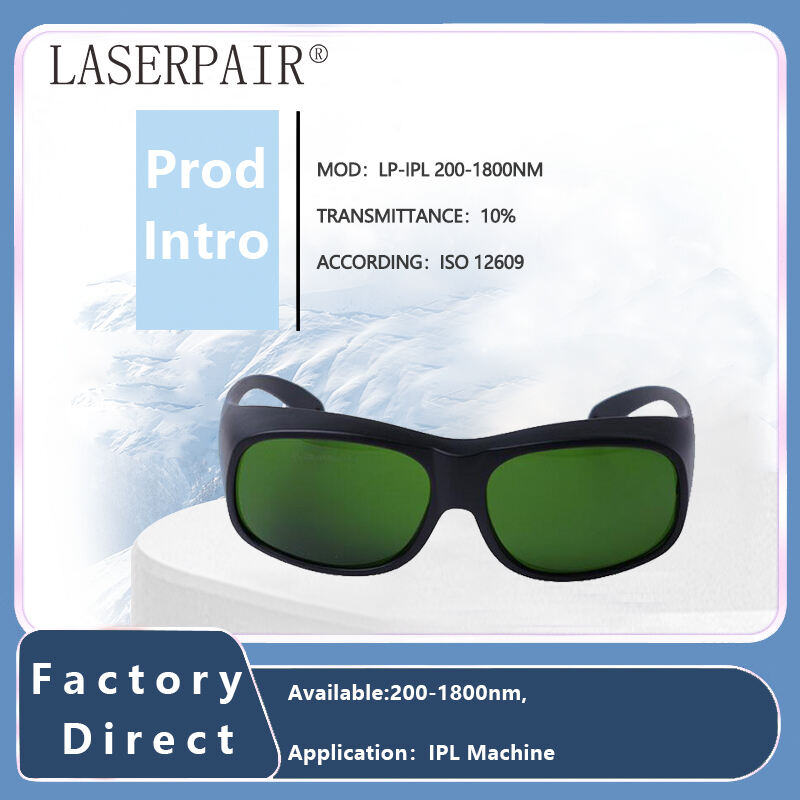
When dealing with 532 nm green lasers, good quality safety goggles need at least OD4+ protection levels to do their job properly. For Class 4 lasers that pack 500 mW or more power, OD7+ becomes mandatory according to OSHA standards. Look for eyewear labeled with either ANSI Z136 in the US market or EN 207 for European products since these certifications mean they've been tested against both direct laser exposure and reflections from surfaces around them. The best options tend to feature polycarbonate lenses capable of filtering wavelengths between 180 to 540 nm, covering most common laser threats. These lenses still let through about 25-40% of visible light so workers can see clearly enough to get their work done safely without straining their eyes all day long.
Top-Rated Safety Goggles for 532 nm Green Lasers in 2024
Top manufacturers are making some seriously good goggles these days that combine OD7+ protection at 532 nm wavelengths while still being comfortable enough to wear all day long. The premium versions come with wraparound frames that block over 99% of light from the sides, plus they have scratch-resistant coatings so they last longer. Most also feature adjustable nose bridges which makes them fit better on different face shapes, and they apply special anti-fog treatments, something that matters a lot in both medical settings and industrial workplaces. When shopping around, check if the goggles carry LB6+ DIRM certification marks. These indicate the product meets tough European safety requirements for protection against pulsed lasers.
Common Mistakes When Selecting Laser Safety Eyewear and How to Avoid Them
According to the Journal of Occupational Health (2023), 63% of laser-related injuries stem from incorrect eyewear choices. Avoid these critical errors:
- Assuming "green laser" labeling guarantees compatibility without verifying exact wavelength match
- Choosing lower-cost options with insufficient OD ratings, risking inadequate beam reduction
- Neglecting proper frame fit, which allows peripheral exposure from scattered or reflected beams
Always validate eyewear under actual working conditions and consult a certified laser safety officer (LSO) to ensure alignment with institutional protocols.
Best Practices to Prevent Green Laser Exposure in Professional and Public Settings
Safety Protocols for Labs and Industrial Environments Using Green Lasers
Facilities using 532 nm green lasers must enforce layered safety measures to prevent retinal injury. A 2023 NIOSH study showed that labs using real-time beam monitoring systems reduced accidental exposures by 83% compared to those relying on visual checks alone. Essential protocols include:
- Controlled Access Zones — Install interlocked doors with automatic shutoffs compliant with ANSI Z136.1
- Environmental Safeguards — Use non-reflective surfaces and anti-glare equipment finishes to minimize beam scatter
- Personnel Training — Conduct monthly emergency drills focusing on rapid shutdown procedures
Additionally, facilities handling Class 3B or 4 lasers should perform quarterly optical density tests on protective barriers, as 57% of lab incidents occur due to degraded filter materials (Journal of Laser Safety, 2022).
Public Risks: Misuse of Handheld Green Lasers and Regulatory Challenges
The FDA reports a 210% increase in handheld green laser misuse since 2020, with 34% of incidents involving deliberate aircraft illumination. Major challenges persist:
- Inconsistent Power Limits: The EU permits public sale of ≤5 mW units, while proposed U.S. regulations suggest a stricter ≤1 mW cap (2024 Laser Safety Act)
- Counterfeit Devices: An IEC 2023 investigation found that 41% of "safety-certified" green lasers sold online exceed labeled output
- Public Awareness Gaps: Only 12% of consumers recognize the delayed onset of retinal damage symptoms from pulsed green lasers
Law enforcement agencies are increasingly deploying spectrum-analysis tools to trace illegal high-power devices, but global coordination remains essential due to widespread cross-border e-commerce sales.
FAQ Section
Are all green lasers dangerous to the eyes?
Not all green lasers are inherently dangerous, but those with high power output, particularly 532 nm lasers, pose significant risks due to eye sensitivity and high visibility.
Why is 532 nm considered a hazardous wavelength for lasers?
The 532 nm wavelength aligns closely with the peak sensitivity of human eyes, making them appear brighter and causing chromophore absorption in retinal cells, which increases the potential for eye damage.
What safety features should laser safety goggles have?
Good quality laser safety goggles should have at least OD4+ protection levels with certifications like ANSI Z136 or EN 207, ensuring they filter the specific 532 nm wavelength effectively.
How can public misuse of handheld green lasers be reduced?
Stricter regulations, better consumer education on potential hazards, and spectrum-analysis tools for illegitimate devices can help reduce misuse of handheld green lasers.
Table of Contents
- How green lasers damage the retina through photochemical and thermal effects
- Why 532 nm green lasers are particularly hazardous due to high visibility and eye sensitivity
- Laser classification breakdown: Risks of Class 3R, 3B, and Class 4 green lasers
- The Importance of Wavelength-Specific Protection for 532 nm Lasers
- Choosing and Using Laser Safety Goggles for Green Laser Protection
-
Best Practices to Prevent Green Laser Exposure in Professional and Public Settings
- Safety Protocols for Labs and Industrial Environments Using Green Lasers
- Public Risks: Misuse of Handheld Green Lasers and Regulatory Challenges
- FAQ Section
- Are all green lasers dangerous to the eyes?
- Why is 532 nm considered a hazardous wavelength for lasers?
- What safety features should laser safety goggles have?
- How can public misuse of handheld green lasers be reduced?