
 EN
EN



Next-Generation Laser Protective Eyewear and Optical Density Innovation
Broadband & Tunable OD Filters for Multi-Wavelength Laser Environments
Laser tech these days works with several different wavelengths at once UV, visible light, and near infrared creating all sorts of tricky safety issues. The old school fixed optical density glasses force workers to keep track of multiple special pairs which drives up expenses, creates headaches for storage and management, and just plain increases chances for mistakes. Broadband filters are changing the game though they block out harmful radiation consistently across big chunks of the spectrum like from 190 to 1100 nanometers. There are also these tunable filters made with electrochromic stuff that can actually change their protection level on the fly depending on what wavelength is being used. Labs and factories report saving around 40 percent on gear costs since switching to these new systems, plus nobody has to fumble through different goggles anymore when moving between tasks. This hands off approach means safer operations overall, making it a big deal advancement for anyone working regularly with lasers.
Real-Time OD Monitoring and Adaptive LPE Systems
Laser protective eyewear tends to break down over time in ways people often don't notice at first glance. Scratches build up, UV light takes its toll, and materials just get worn out naturally all while the protective qualities drop below what's needed for safety. The latest tech solves this problem by putting tiny sensors inside the glasses themselves. These sensors constantly check how much protection remains and give physical warnings through vibrations when things start getting dangerous. Some high end models go even further by connecting directly to laser equipment controls. When protection levels fall too low, the system either cuts back on laser power or shuts things down completely as a precaution. Another smart addition comes in the form of special lenses containing nanoparticles that instantly darken whenever there's excessive light exposure, providing an extra layer of defense against sudden hazards. Real world testing shows workplaces that adopt these smart systems see about half as many eye injuries compared to traditional setups. What was once just another piece of personal protective equipment has now become something far more sophisticated in modern safety protocols.
Smart Engineering Controls: Interlocks, Enclosures, and Dynamic Barriers
Engineering controls form the foundational layer of laser safety protection technology—mitigating hazards at the source, before human interaction is required. Their integration into system design significantly reduces exposure risk in high-power laser environments.
AI-Driven Interlock Systems with Predictive Failure Analytics
Artificial intelligence is changing how we think about safety systems, turning basic interlocks into something much smarter and more proactive. The machine learning models look at all sorts of live data from equipment operation like voltage levels staying stable, temperature changes over time, and how well relays are performing before they fail. Take relays for instance. These systems can spot problems developing in relays with pretty good accuracy around 90% or so, sometimes as much as three days ahead of time. That gives technicians chance to shut things down safely during regular maintenance periods rather than dealing with emergencies. When workers open up control panels or if there's any breach in containment, these smart systems help stop dangerous beams from being released accidentally. Beyond just safety, these predictive tools make maintenance scheduling a lot easier too. Plants report seeing roughly a third less unexpected downtime compared to traditional methods, which means better productivity without sacrificing safety standards across the board.
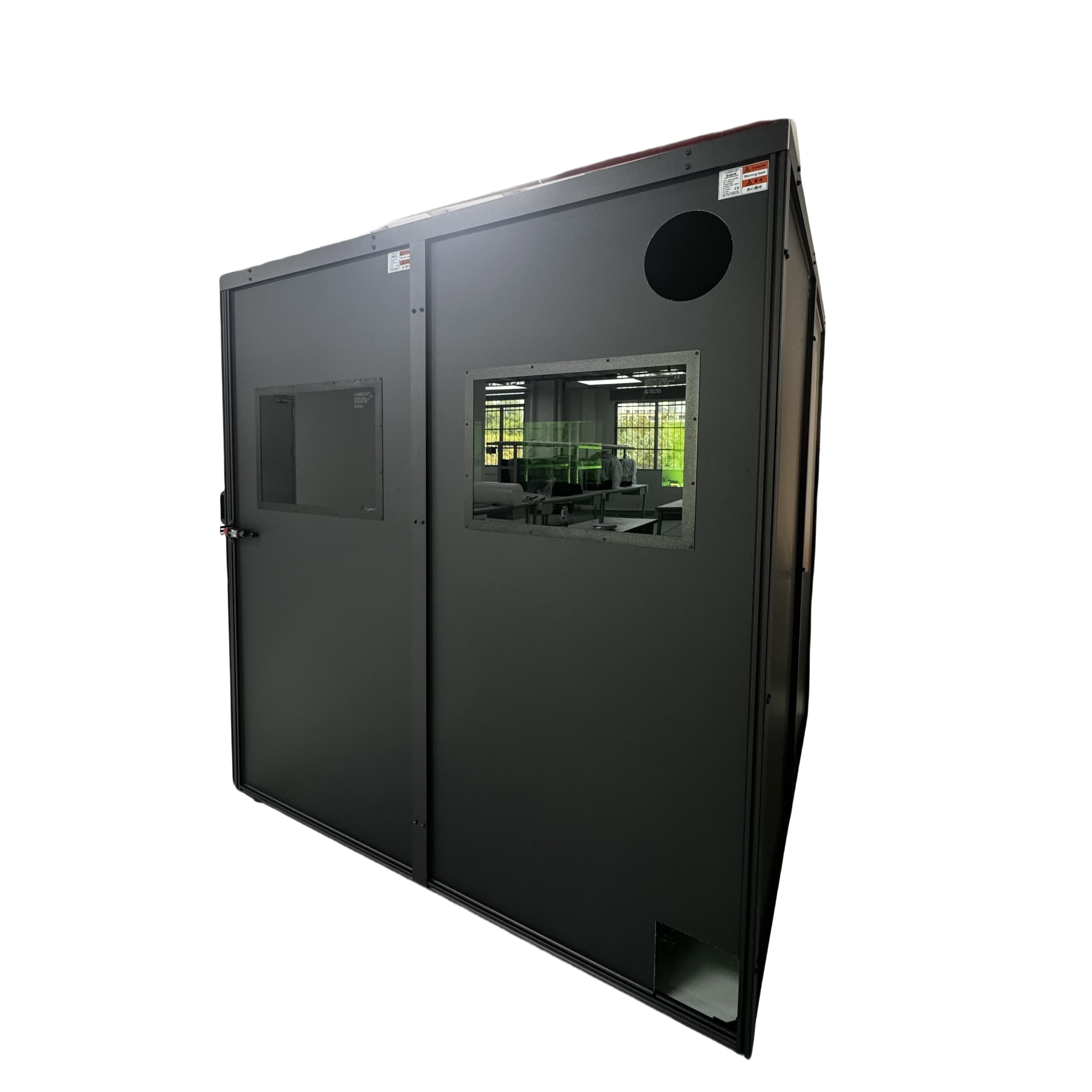
Modular Beam Enclosures with Active Light-Attenuation Surfaces
Modular enclosures respond to dynamic laser workflows through reconfigurable panels embedded with electrochromic materials. These surfaces autonomously adjust opacity upon detecting specific wavelengths—attenuating beams within milliseconds. Key advantages include:
- Multi-wavelength defense: Uniform protection across 190–1100 nm without recalibration
- Workflow agility: Full reconfiguration in under 15 minutes for evolving beam paths
-
Class 4 containment: Sustains Class 1 equivalent safety levels during operation
Integrated photodiodes monitor transmitted light in real time, allowing precise opacity modulation—even for hazardous pulses exceeding 10 W.
Intelligent Laser Controlled Area (LCA) Design and NHZ Optimization
Biometric + RFID Adaptive Access Control with Real-Time NHZ Mapping
The Intelligent Laser Controlled Area (LCA) system improves safety by constantly adjusting the Nominal Hazard Zone (NHZ), which is basically the area where laser radiation goes beyond what's considered safe for humans. Today's LCA setups mix biometric checks like fingerprint scans or retinal recognition with RFID tags on staff badges to make sure only properly trained people get access based on their roles. At the same time, these systems rely on networks of sensors spread throughout the facility that track where laser beams are going in real time. When machines move around or settings get changed, the hazard zones automatically resize themselves. This kind of smart zoning cuts down on accidental exposure without making operations too restrictive. According to data from Safety Science Journal back in 2019, places that adopted these adaptive LCAs reported about 35% fewer laser injuries. Not only does this help meet those ANSI Z136 standards everyone talks about, but it also shows how important good spatial planning really is when it comes to keeping workers safe around lasers.
Holistic Risk Mitigation: Addressing Non-Beam Hazards in Modern Laser Safety Protection Technology
Direct beam exposure gets all the attention, but the real problem comes from those non-beam risks which make up almost 40% of laser accidents according to the Journal of Laser Applications last year. Think about it: workers get shocked by high voltage equipment, exposed to chemicals when coolants leak or cleaning products spill, fires start when beams hit flammable stuff, and everyone ends up with back pain after hours adjusting laser setups. To actually fix these issues, facilities need proper engineering solutions like grounded boxes around machines, good air flow systems near hazardous areas, and barriers that stop chemicals from spreading everywhere. Combine that with solid procedures too – making sure equipment stays off during maintenance, having plans ready if something spills, and setting up work stations that don't wreck people's bodies over time. And here's something important: the No Hazards Zone definitions shouldn't just look at light levels. They need to consider other dangers too. For example, expanding safety zones around places where high voltage equipment sits next to laser rooms or where solvents are stored nearby. Companies that take this comprehensive approach see their non-beam accident rates drop by almost 60% compared to ones focused only on beam safety. Makes sense really, because true laser safety isn't just about keeping the light contained, it's about managing every possible risk factor across the whole operation.
FAQ
What are broadband filters?
Broadband filters block harmful radiation consistently across large portions of the spectrum, typically covering wavelengths from 190 to 1100 nanometers.
How do real-time OD monitoring systems work?
Real-time OD monitoring systems use tiny sensors inside laser protective eyewear to constantly check protection levels and provide physical alerts when safety thresholds are breached.
What are AI-driven interlock systems?
AI-driven interlock systems utilize machine learning models to analyze operational data, allowing for proactive identification of equipment failures and enhancing laser safety protocols.
How do intelligent LCA designs prevent laser injuries?
Intelligent LCA designs use adaptive access controls, including biometrics and RFID, along with sensor networks to dynamically monitor and adjust Nominal Hazard Zones, reducing accidental exposure risks.
Table of Contents
- Next-Generation Laser Protective Eyewear and Optical Density Innovation
- Smart Engineering Controls: Interlocks, Enclosures, and Dynamic Barriers
- Intelligent Laser Controlled Area (LCA) Design and NHZ Optimization
- Holistic Risk Mitigation: Addressing Non-Beam Hazards in Modern Laser Safety Protection Technology
- FAQ