
 EN
EN


Core Laser Safety Standards: ANSI Z136 and IEC 60825 Series
ANSI Z136 Series – The North American Benchmark for Laser Safety
ANSI Z136 stands as the core set of standards governing laser safety across North America, something OSHA officially recognizes as enforceable for around 48 million workers in industries ranging from automotive to aerospace. After getting updated back in 2022, the main document Z136.1 now covers emerging dangers related to things like 3D printing and robots working alongside lasers. This standard outlines pretty much everything needed when it comes to assessing hazards, implementing controls, and making sure Laser Safety Officers receive proper training. There are also specialized parts of the standard worth mentioning. Take Z136.9 for instance, which specifically targets manufacturing settings. It mandates that laser cutting equipment must have safety locks installed and that the actual path of the laser beam needs to be properly contained through engineering solutions rather than just relying on basic barriers.
IEC 60825 Series – International Standard for Laser Product Safety
IEC 60825 has become the standard reference point for laser safety around the world, recognized in over 85 nations according to industry reports. The standards focus heavily on built-in safety features like emergency stop systems and power reduction when exposure goes beyond what's considered safe for human eyes. For companies wanting to sell their laser products globally, meeting requirements from IEC 60825-1 is essential. This involves getting independent checks on things like protective optical barriers and ensuring warning labels are available in multiple languages so users everywhere understand potential risks properly.
Key Differences Between ANSI Z136.1 and IEC 60825-1
The two standards share the same four-class hazard rating system from Class 1 to Class 4, though they apply differently in practice. ANSI Z136.1 mainly deals with how these standards get implemented at work sites, requiring things like regular safety training sessions and having someone watch over operations closely. On the flip side, IEC 60825-1 looks more at what goes into making the actual laser equipment safe right from the start. Most industrial lasers out there today (around 94%) end up meeting both sets of requirements somehow. One big difference shows up when it comes to checking where the laser beams are pointing. According to ANSI rules, workers need to check their beam paths every single day. Meanwhile, the IEC standard wants manufacturers to install continuous monitoring devices specifically for those powerful laser systems.
Global Harmonization Efforts in Laser Safety Regulation
Since 2019, the International Laser Safety Consortium (ILSC) managed to cut down on regulatory differences between countries by roughly 40%. They did this through their crosswalk program that basically brings ANSI and IEC standards into line with each other. The latest changes coming out of ISO/TC 172 are making things easier for manufacturers too. Now protective eyewear certified according to ANSI Z136.1+ standards can also satisfy IEC 60825-4 requirements without going through all those extra checks and paperwork. Still, there's quite a gap in how these rules get enforced across different regions. Over in Europe, regulators mostly look for products marked with the CE symbol showing they meet IEC standards. Meanwhile back in America, inspectors want to see detailed records specifically addressing hazards according to ANSI guidelines.
Laser Hazard Classification and Nominal Hazard Zone (NHZ) Assessment
Understanding Laser Classes 1 to 4 and Associated Risks
Laser safety standards divide them into four classes based on how dangerous they might be to living tissue. At one end of the spectrum we have Class 1 lasers which basically don't pose much threat at all. Then there's Class 4 that can cause serious problems like skin burns or even permanent damage to eyesight. The middle categories, specifically Class 3B and 4, show up frequently in manufacturing settings for tasks like cutting metal or welding parts together. These types of lasers surpass maximum permissible exposure levels almost instantly, so proper safety measures become absolutely essential when working with them. Fortunately, most countries follow either the ANSI Z136 guidelines or the IEC 60825 standards, which helps keep things pretty consistent worldwide when it comes to assessing laser risks.
Maximum Permissible Exposure (MPE) and Risk Evaluation
The Maximum Permissible Exposure level basically tells us what's considered safe for our eyes and skin when it comes to laser exposure. This safety threshold depends on several factors including the light's wavelength, how long someone is exposed, and whether the beam pulses or not. The specifics can be found in the ANSI Z136.1 standard, which most engineers consult when they need to create protective measures like safety interlocks or optical attenuators for laser equipment. Recent research from last year showed some pretty concerning numbers too. About 89 percent of all industrial laser accidents happened because workers simply missed accounting for reflective surfaces during their MPE calculations. That really underscores why we need to keep updating our risk assessments as conditions change in the workplace.
Determining the Nominal Hazard Zone in Industrial Settings
The Nominal Hazard Zone or NHZ marks off regions where laser light goes beyond safe exposure limits, which means these areas need restricted access or some kind of barrier protection. Several things affect how big an NHZ gets. For instance, higher power makes bigger zones - a 40 watt laser will create an NHZ roughly three times larger than what we see with a 10 watt system. Other factors matter too like how spread out the beam is and whether the laser operates continuously or in pulses. Pulsed lasers actually stretch out their hazard zones by around 15 to 20 percent when compared to steady state operation. Looking at industry data from the latest 2023 analysis on NHZs shows interesting results. Car makers managed to shrink their hazardous areas by about 34% simply by enclosing the laser beams within protective housings and adding live monitoring systems. These kinds of engineering fixes prove practical ways to manage safety concerns effectively.
Engineering and Administrative Controls for Industrial Laser Safety
Engineering Controls: Enclosures, Interlocks, and Beam Containment
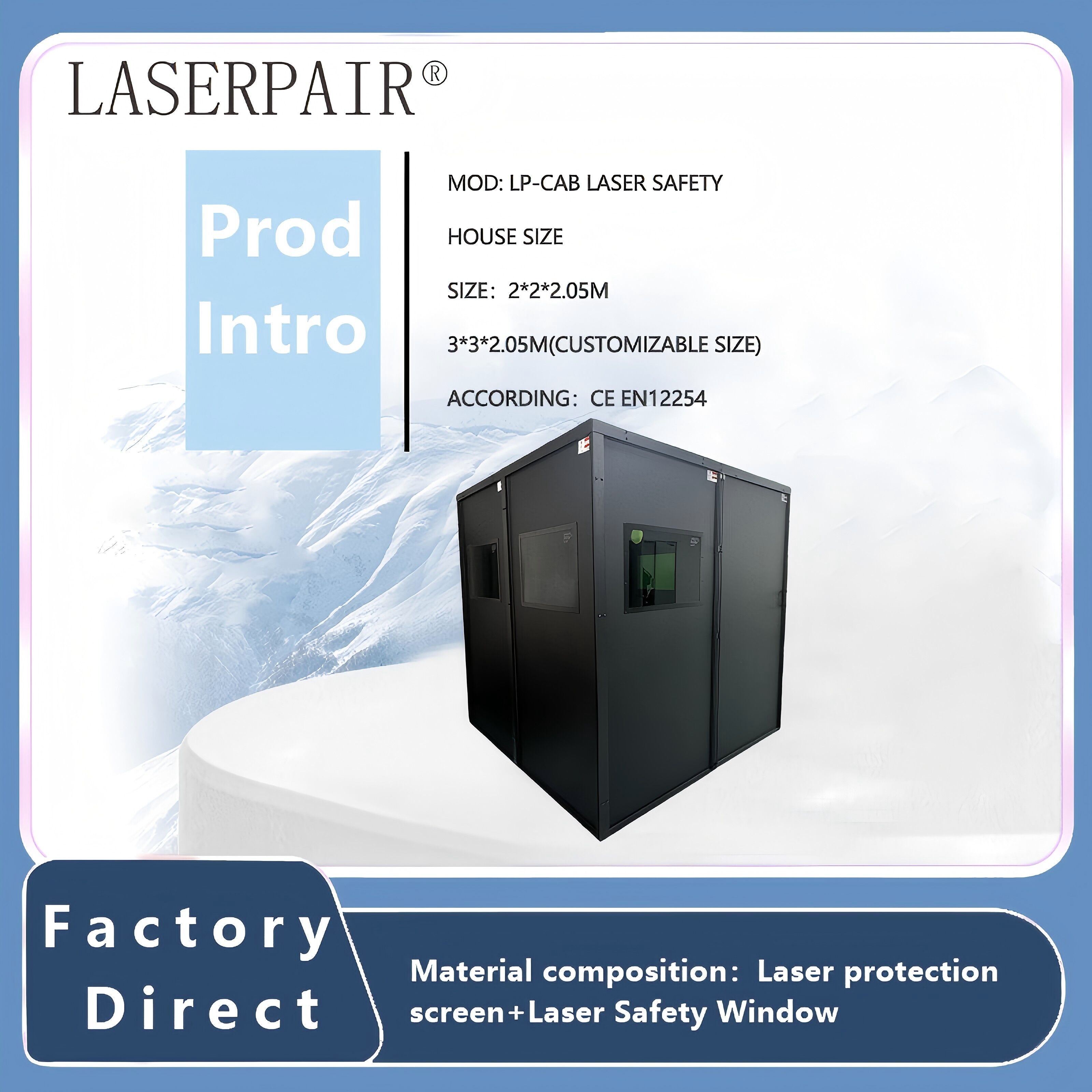
Safety measures built into industrial lasers act as the primary protection against accidents. When maintenance work needs to be done, interlocked enclosures stop the machine from running until everything is properly sealed up again, which meets requirements set out in standard IEC 60825-1. Various methods keep laser beams contained effectively, including things like spatial filters and automatic shutters that cut down on stray radiation by around ninety percent when compared to systems without these features. With multiple layers of containment in place, even powerful Class 4 laser systems can behave safely like lower risk Class 1 equipment, significantly reducing dangers right where they start.
Fail-Safe Design and Case Study: Automotive Laser Welding Systems
A leading automotive manufacturer reduced laser-related incidents by 74% after retrofitting 12 production lines with redundant interlocks and infrared beam sensors. The updated system includes fail-safe power cutoffs that activate within 0.8 seconds of detecting a containment breach, meeting ANSI Z136.1 benchmarks for engineering controls.
Administrative Controls and Standard Operating Procedures (SOPs)
When engineering controls cannot fully mitigate risk, documented SOPs establish safe work practices. Mandatory laser safety training reduced operator errors by 63% in facilities using >1kW systems, according to NIOSH (2022). Effective SOPs detail alignment protocols, lockout/tagout procedures, and emergency response actions tailored to each laser class.
Laser Controlled Areas (LCA) and Access Management
Laser Controlled Areas (LCAs) integrate physical and procedural safeguards via tiered access:
- Biometric authentication for Class 4 zones
- Visual warning lights linked to automatic beam shutoff
- Real-time occupancy detection using thermal sensors
This layered approach ensures MPE limits are maintained without disrupting high-volume operations.
Personal Protective Equipment (PPE) and the Hierarchy of Laser Controls
Selecting Laser Safety Eyewear by Wavelength and Power
Safety glasses for lasers are basically the last line of defense against eye injuries from laser exposure, but they won't work unless they match the specific wavelength and power level of whatever laser is being used. According to NIOSH data from 2023, almost 4 out of every 10 laser accidents happen because people didn't pick the right eyewear for their equipment. The filters need to stop not just the main laser beam but also those pesky harmonic frequencies. Take a standard 1064 nm Nd:YAG laser for instance, workers need protection that also covers those shorter wavelength harmonics at 532 nm and 355 nm. These days manufacturers have developed lens technology that can reach OD8+ levels while still letting through about 40% visible light, which makes them much easier to actually wear during long operations without straining the eyes.
Protective Barriers and Curtains for NHZ Perimeter Safety
Polymer-based laser curtains with UV absorbers provide reliable containment at NHZ boundaries. High-performance models feature:
- Optical Density ≥6 at operating wavelengths
- Flame resistance exceeding 60 seconds (ASTM E84 Class A)
- Anti-static coatings to prevent ignition of airborne particulates
These barriers support safe perimeter management in dynamic industrial settings.
Hierarchy of Controls: From Elimination to PPE in Laser Risk Mitigation
The National Institute for Occupational Safety and Health outlines a prioritized framework for risk reduction:
- Elimination: Replace Class 4 systems with lower-power alternatives where feasible
- Engineering Controls: Install beam enclosures with IR sensors that trigger shutdowns
- Administrative Controls: Enforce pre-operation alignment checks and access logs
- PPE: Use safety goggles verified through regular transmissivity testing
This hierarchy emphasizes eliminating hazards before relying on personal protection.
Integrating Layered Controls: Insights from NIOSH on Effectiveness
Combining multiple control layers reduces incident risk 83% more effectively than relying on PPE alone. A Class 3B laser engraving system exemplifies this strategy:
- Engineering: Fully enclosed beam path with keyed interlocks
- Administrative: Maintenance logs reviewed by the LSO
- PPE: Wavelength-specific goggles stored in sealed, anti-scratch cases
This defense-in-depth model supports ANSI Z136.1’s mandate for “multiple, mutually supporting safeguards” in industrial applications.
Laser Safety Programs and the Role of the Laser Safety Officer (LSO)
Building Comprehensive Laser Safety Programs in Industry
Good laser safety programs tend to work best when they take a step-by-step method, including written standard operating procedures, physical protections like interlocks and enclosures, plus things like tracking who accesses equipment and reporting any accidents. Places that handle Class 3B or 4 lasers must actually put all these pieces together according to regulations. Recent research from 2024 showed something pretty striking too - companies that had proper safety systems in place saw about two thirds fewer problems compared to places where people just made things up as they went along. That kind of difference really highlights how important it is to have structured approaches rather than winging it with laser operations.
Responsibilities of the Laser Safety Officer (LSO)
The LSO is the technical authority responsible for laser risk management and is required by ANSI Z136.1 to conduct quarterly audits and ensure training compliance. Key responsibilities include:
- Confirming accurate laser classification under real-world conditions
- Calculating NHZ dimensions during maintenance or reconfiguration
- Maintaining inspection records and repair histories
The LSO plays a critical role in sustaining program integrity and regulatory compliance.
Laser Safety Training for Employees and Contractors
OSHA mandates annual laser safety training for personnel working near Class 3R and higher lasers, covering topics such as PPE selection and emergency shutdown procedures. Facilities incorporating hands-on simulations into training curricula reported a 41% reduction in protocol violations, according to 2023 workforce safety data.
Regional Variability in LSO Qualifications: A Compliance Challenge
U.S. regulations define LSO qualifications through ANSI-accredited certification programs, while the EU’s IEC 60825-1 delegates competency standards to individual member states. This inconsistency poses challenges for multinational companies, which must conduct biannual audits of regional LSO competencies to ensure consistent safety oversight and compliance.
FAQ Section
What are the ANSI Z136 standards?
ANSI Z136 standards are a set of regulations governing laser safety across North America, recognized by OSHA to protect workers in various industries from laser hazards.
How does IEC 60825 help in laser product safety?
IEC 60825 is an international standard for laser safety that mandates built-in safety features for laser products, ensuring they are safe for global distribution.
What is the Nominal Hazard Zone (NHZ)?
The Nominal Hazard Zone (NHZ) is the area where laser light can exceed safe exposure limits, requiring restricted access or specific safety barriers.
Why is the Laser Safety Officer important?
The Laser Safety Officer (LSO) is crucial for managing laser risks and ensuring compliance with safety standards through audits and training.
Table of Contents
- Core Laser Safety Standards: ANSI Z136 and IEC 60825 Series
- Laser Hazard Classification and Nominal Hazard Zone (NHZ) Assessment
- Engineering and Administrative Controls for Industrial Laser Safety
- Personal Protective Equipment (PPE) and the Hierarchy of Laser Controls
- Laser Safety Programs and the Role of the Laser Safety Officer (LSO)
- FAQ Section