
 EN
EN


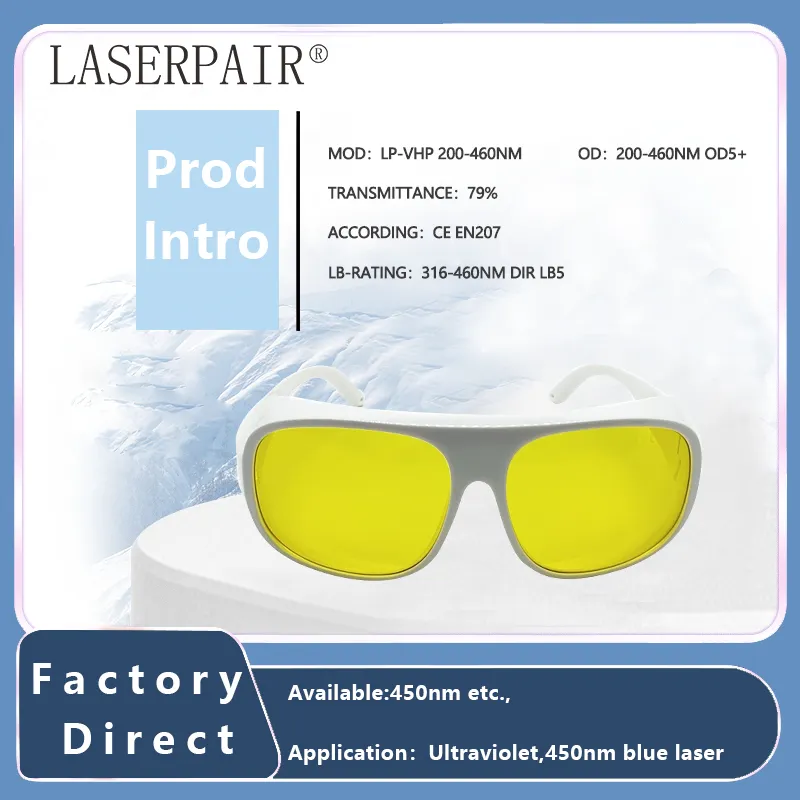
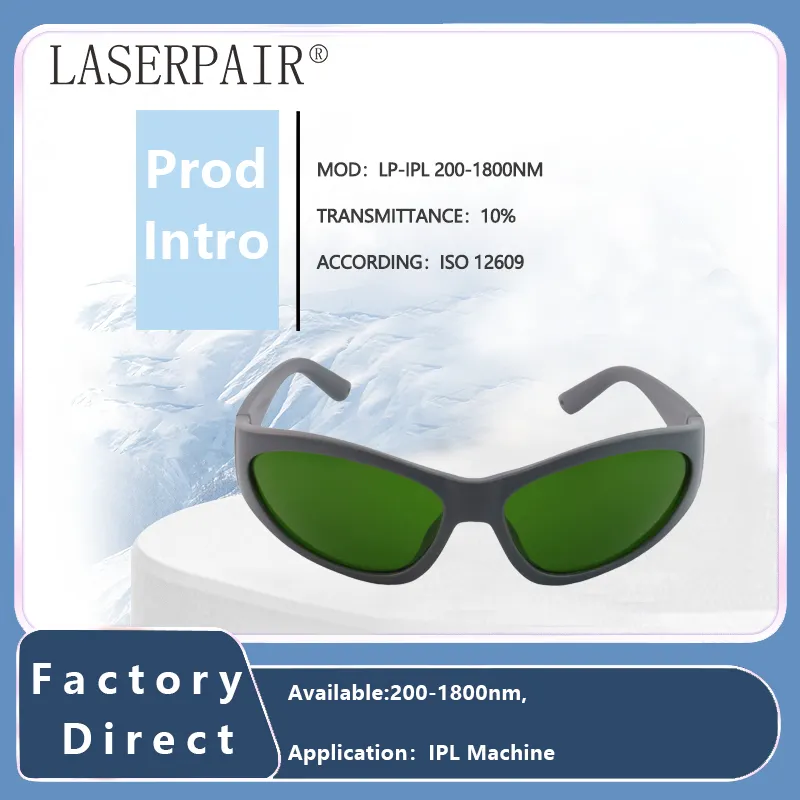
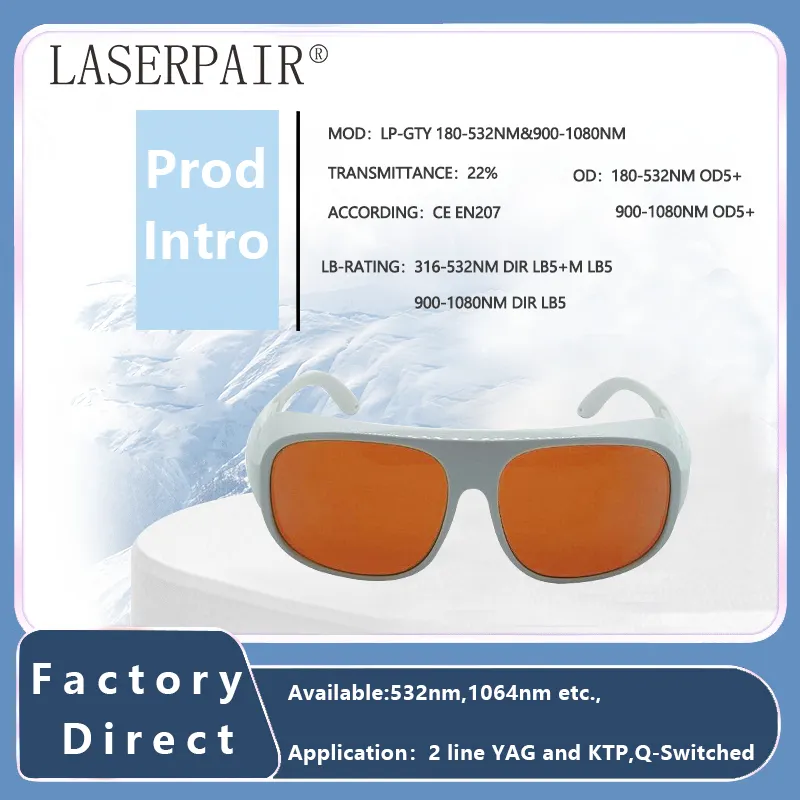
When operating a 4-kilowatt fiber laser, the beam can cause irreversible retinal damage faster than the human blink reflex. Optical Density (OD) is the primary metric that validates whether your laser safety goggles are a life-saving tool or merely a false sense of security.
For safety managers and technicians, understanding OD is not just a technical requirement—it is a non-negotiable safety mandate.
The Role of Optical Density in Preventing Retinal Injury
The human eye focuses laser light onto the retina, concentrating energy by up to 100,000 times. A Class 4 fiber laser (≥500 mW) can induce a permanent blind spot within a single pulse. OD directly dictates the fraction of hazardous energy that reaches the retina.
Research in simulated Class 4 environments confirms that eyewear with an OD of 5 or greater effectively mitigates ocular exposure incidents. Because the OD scale is logarithmic, even a minor 0.5 OD shortfall can let through three times as much radiation, leading to hemorrhages, scotomas, and permanent vision loss.
Understanding Logarithmic Protection: The Base-10 Scale
Optical Density follows a base-10 logarithmic scale, meaning each whole-number increase multiplies protection by ten.
-
OD 3: Blocks 99.9% of incoming light.
-
OD 6: Blocks 99.9999% of incoming light.
-
The Impact: For a continuous-wave fiber laser at 1070 nm, an OD 7 lens attenuates the beam by a factor of 10 million.
Understanding this relationship ensures that safety equipment is neither under-engineered (leading to injury) nor over-engineered (limiting operator visibility unnecessarily).
Matching OD to Wavelength and Power Profiles
Broadband Coverage vs. 1064 nm Assumptions
Many standard goggles are labeled for 1064 nm only. However, fiber laser output can drift or broaden during handheld welding. Broadband protection covering the 1030–1090 nm range is essential. Always verify the wavelength range on the lens to ensure it accounts for the entire operating band of your laser source.
Calculating Minimum OD (ANSI Z136.1 §5.4.2)
Use the standard formula to calculate your minimum protection requirement: OD ≥ log₁₀ (Incident Power / Maximum Permissible Exposure)
For a 1 kW Class 4 laser, incident power can exceed 10⁶ W/m². Using the MPE for 1070 nm, the required OD is often 9 or higher. Pro-tip: Always select goggles rated at least 1–2 OD units above your calculated requirement to provide an essential safety margin for dynamic work environments.
Selecting Certified Safety Equipment
Why EN 207 L-Level Certification is Mandatory
For handheld welding, EN 207 L-Level certification is the industry benchmark. Unlike basic laboratory simulations, this certification validates the eyewear’s ability to withstand direct laser beam exposure and shock under actual welding conditions.
Hazards of Real-World Environments
Beyond direct beams, consider these ambient hazards:
-
Reflections: Diffuse reflections from curved metal surfaces can deliver 1,000 times more energy than anticipated.
-
Lateral Coverage: ANSI-compliant eyewear must block angled scatter patterns, validated at a ±120° arc.
-
Degradation: Facilities that skip annual attenuation checks risk a 37% drop in protection efficacy after 18 months. Ensure your facility maintains documented testing via accredited labs.
Frequently Asked Questions
What is Optical Density (OD)? OD measures the attenuation of laser light by a filter. It indicates how effectively safety goggles reduce laser power to safe levels for the human eye.
Why is OD so critical for Class 4 fiber lasers? Class 4 lasers carry enough power to cause permanent, instantaneous retinal damage. Proper OD ratings ensure that the fraction of energy reaching the eye is below the Maximum Permissible Exposure (MPE).
How do I calculate the OD needed for my specific laser? Use the formula: OD ≥ log₁₀ (Incident Power / MPE). Always add a safety margin of at least 1–2 OD units to account for potential reflections and beam drift.
Are standard 1064 nm goggles safe for all fiber lasers? No. Many fiber lasers drift outside the 1064 nm band. Broadband goggles (1030–1090 nm) are required to ensure consistent protection.
What certifications should I look for? Prioritize EN 207 L-Level for direct exposure protection and ANSI Z136.1 for wavelength-specific durability and testing compliance.