
 EN
EN


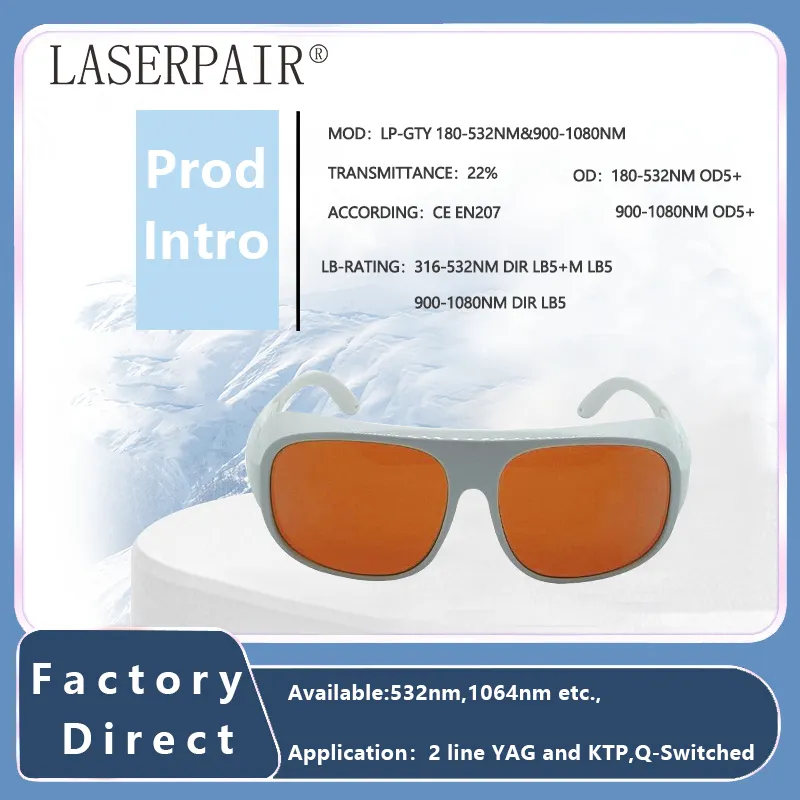
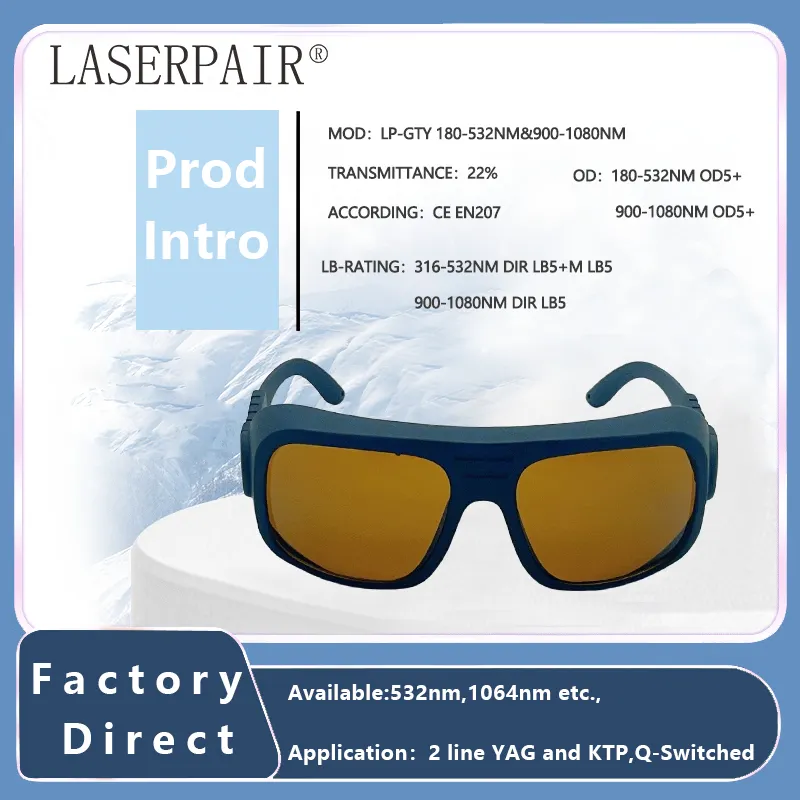
This article outlines why EN207 is the globally trusted benchmark for protecting personnel in medical and high-stakes laser environments.
Why EN207 is the Global Benchmark
Unlike generic safety eyewear, EN207 mandates accredited third-party testing against specific laser classifications:
-
D: Continuous-Wave (CW) lasers.
-
I / R: Pulsed lasers with varying durations and frequencies.
-
M: Ultrafast systems.
EN207 goes beyond simple Optical Density (OD) ratings. It enforces rigorous endurance testing to ensure that both the filter and the frame maintain structural integrity during a worst-case exposure event.
The Power of Direct-Hit Testing (5 sec / 50 Pulses)
The hallmark of EN207 is its physically rigorous direct-hit test. Protective eyewear must withstand:
-
Continuous-Wave: 5 seconds of direct exposure.
-
Pulsed Laser: 50 pulses at rated energy density.
Failure criteria include filter burn-through, frame deformation, or material degradation. This testing replicates real-world hazards, such as misaligned surgical lasers or beam path errors during maintenance, ensuring the equipment performs when it matters most.
Understanding LB Ratings and Optical Density
The LB rating indicates the maximum laser irradiance a device can withstand. Selecting the correct classification is non-negotiable:
| LB Rating | Laser Application |
| LB4 D | CO₂ surgical lasers (10,600 nm) |
| LB5 I | Q-switched Nd:YAG dermatology lasers (1064 nm) |
| LB6 R | High-repetition-rate aesthetic diode lasers |
| LB7 M | Ultrafast mode-locked femtosecond systems |
Balancing Protection and Clarity: High OD (>7) is critical, but excessive filtering can compromise visual light transmission (VLT). Leading EN207-certified goggles now use multi-layer dielectric coatings to provide >50% VLT, allowing technicians to perform precision fibre-optic alignment or endoscopic tasks without removing safety gear.
Regulatory Impact and Global Supply Chains
Because EN207 is the only harmonized standard for direct-beam protection under the EU PPE Regulation, it is the primary choice for global compliance. Whether your facility is in North America, Asia, or Australia, adopting EN207 streamlines regulatory submissions and mitigates risk—making it the de facto international standard for laser safety.
Real-World Impact: Reducing Occupational Incidents
Facilities that transition to EN207-compliant eyewear report measurable improvements in safety.
Case Study: A German endoscopic laser manufacturer achieved zero reportable ocular injuries within 12 months of standardizing on EN207-certified goggles. Root-cause analysis revealed that previously used non-compliant gear failed during transient exposures. The upgrade to validated LB6 R / OD 7+ protection provided the fail-safe reliability required for high-risk spectral alignment tasks.
Frequently Asked Questions
What is EN207 certification?
It is the EU harmonized standard for laser safety goggles, ensuring protection against direct beam exposure through mandatory endurance testing of both frames and filters.
Why is EN207 critical for medical environments?
Medical lasers present high-risk hazards (e.g., misaligned beams). EN207 ensures the eyewear will not fail, burn through, or deform during emergency exposure.
What do LB ratings mean?
LB ratings (D, I, R, M) specify the type of laser and the maximum energy density the goggles can withstand during direct-hit testing.
How does EN207 impact global standards?
Due to its strict conformity requirements, EN207 has become the global benchmark, helping companies simplify compliance and enhance workplace safety.