
 EN
EN


How Optical Density (OD) Decreases Laser Hazard Risks in Welding
Examining OD: Logarithmic Attenuation
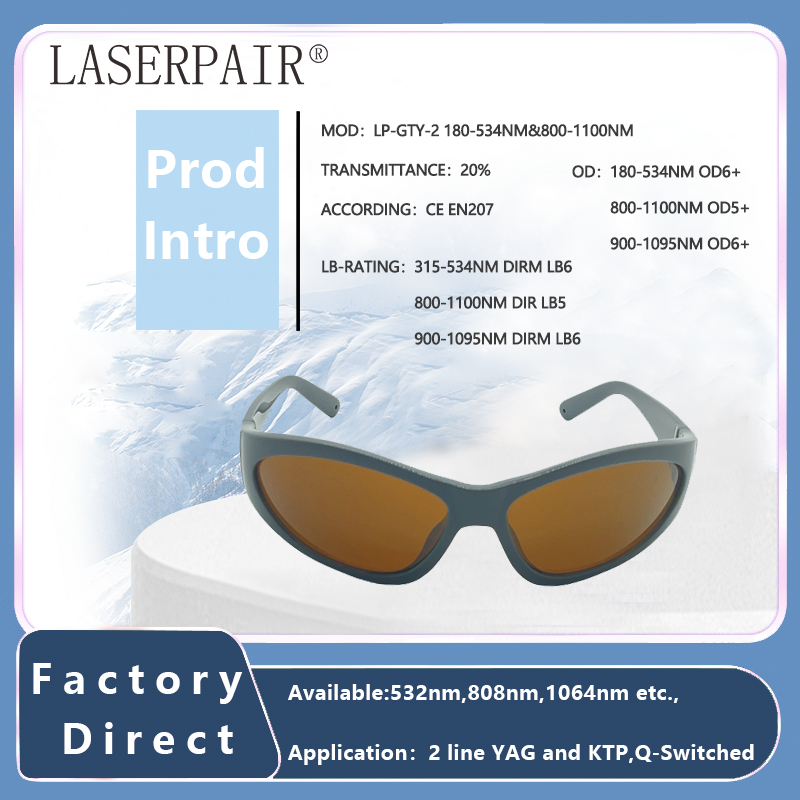
Optical Density (OD) allows us to express how laser welding glasses protect us from harmful radiation using logarithmic attenuation. Laser welding glasses transmit different amounts of laser power. This slight amount of power is determined using the equation: OD = log₁₀ (incident power / transmitted power). Each unit increase of OD decreases the power that is transmitted by a factor of 10. Because of the logarithmic relationship, a small increase in the value of OD results in a much larger increase in protection. Table 1 lists the OD ratings, the attenuation factors, and the percent radiation blocked by the power of the laser.
OD Rating Attenuation % Radiation
Factor Blocked
3 1,000× 99.9%
5 100,000× 99.999%
7 10,000,000× 99.99999%
When comparing the other OD ratings, OD 7 lets through the least amount of incident energy, at 0.00001%. This lens is therefore the most protective when dealing with the high power industrial fiber lasers, exceeding 10 kW. Because of how logarithmic shading works, upgrading the lens in protection from OD 5 to OD 6 results in a tenfold increase in protection, from 99.999% to 99.9999%. This logarithmic relationship in protection explains why the lens needs to be of the highest OD specification for safety in high power laser welding.
The Necessity of OD for Nd:YAG and Fiber Laser Welding
Industrial welding with the higher power lasers, such as Fiber Lasers (from 1030 nm to 1080 nm) and Nd:YAG lasers (1064 nm), impacts the OD selection for safety and protection. These lasers have pulsed peak power densities of greater than 5 MW/s and can cause intense damage in the form of retinal burns due to the extremely high power. The results of increased OD rating is to increase protection with a significant logarithmic factor. Regular shades of polycarbonate or tinted lenses have minimal protection against the lasers that Nd:YAG and Fiber Lasers possess. The American National Standards Institute (ANSI) Z136.1 recommends OD 7 eyewear for the continuous lasers of fiber, if their output is at least 1.5 kW,
Selecting the Appropriate OD Rating by Laser Type and Operating Parameters
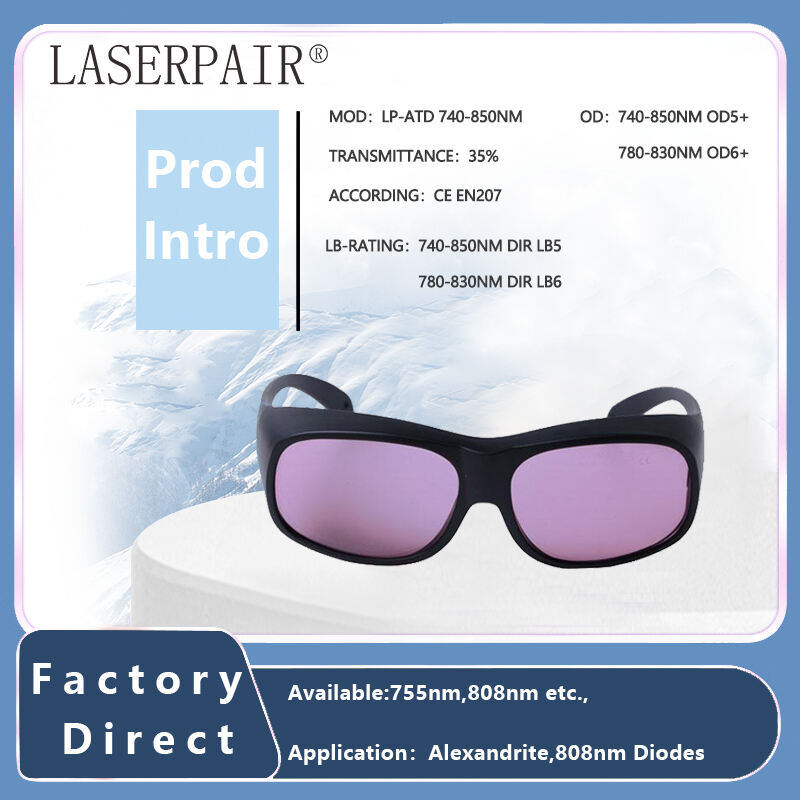
Determining the appropriate Optical Density (OD) rating for laser welding spectacles requires thorough consideration of the setup and the laser system’s wavelength, as well as the power and operational modes, which will identify the threat to eyes.
OD 7+ Is the Norm for 3 kW Continuous Wave Fiber Laser Welding
For 3 kW continuous wave (CW) laser welding on near infrared (NIR) laser welding, an OD of 7 should be used as the standard for all protective laser eyewear. This is not a suggestion, but a requirement. At 3 kW, the intensity of the laser beam can cause irreversible retinal damage in a matter of milliseconds, and the absence of visible radiation means there is no natural instinct to move away from the eye hazard. An OD 7 rating provides a 10^7 (ten million) times reduction in the energy of the laser, which is a safe level, as outlined in the American National Standards Institute (ANSI) Z136.1. An OD rating of less than 7 allows a dangerously higher quantity of laser energy to be transmitted, which can result in irreversible retinal injury (photocoagulation). Because the OD scales on a logarithm, OD 7 provides 100 times more safety than OD 5, for the same wavelength.
Evaluation of OD Necessity for Pulsed Lasers Compared to Continuous Wave Lasers
Compared to Continuous Wave lasers, pulsed lasers do not require higher average powers to maintain the same OD. The need for a higher OD in pulsed lasers is due to the transient peak power. For example, compared to a Continuous Wave laser, a 1 kW average pulsed Nd:YAG laser with 10 ns pulses would have a pulse peak power of over 100 MW and produce a pulsed laser with high peak power. Therefore, the choice of OD would rely on the pulse peak power, the duration of the pulse (which implies that the shorter the pulse, the higher the OD), and the recurrence rate of the pulse (because the closer the pulse is to continuous, the lower the OD would need to be). An example of this would be a Nd:YAG laser that emits 10 ns pulses with a recommence of 1 kHz, which would then require an OD of 8+ regardless of its sub-kilowatt average power. The output of the laser would need to be cross-qualified with ANSI Z136.1 to meet the compliance of the OD, so it would be best to cross-check the pulse parameters given in the manufacturer’s specifications with the ANSI Z136.1 MPE tables.
Compliance Essentials: EN 207, EN 208, and ANSI Z136.1 for Laser Welding Glasses
LB-Rating vs. OD: Why EN 207 LB5 ≠ OD 5—and Why It Matters
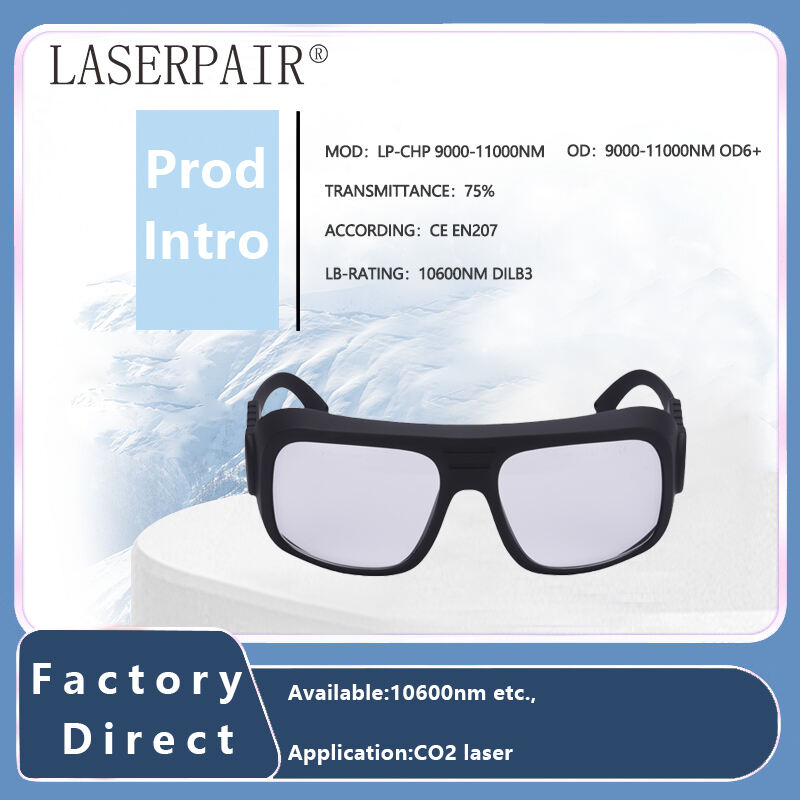
Optical Density (OD) is a measure of attenuation relative to a specific protocol in a laboratory context. It does not mean a lens is capable of surviving a focused laser strike. EN 207 is the European standard that establishes the performance requirements for protective laser eyewear. It states that, in a real world scenario, lens substrate behind the eyewear filter should not be laser permeable after it has been subjected to a direct laser strike for a period of ten seconds of continuous wave operation, or one hundred pulses of laser operation. Such testing results in an LB rating (for example, LB5) and signifies the laser protection eyewear is fully laser protective for that laser class. An optical filter may obtain an OD 5 rating based on laboratory testing, but it is entirely possible that the filter would obtain EN 207 LB5 rating if the lens substrate was laser permeable after it was subjected to a direct strike. For high power fiber or Nd:YAG lasers, it is often OD 7 or higher filters that are adequate for structural integrity. EN 207 is also unique in that it does not allow for manufacturer’s self-certification, meaning that only a third party testing laboratory can grant the LB rating. In the context of high-risk welding, it is considered extremely negligent to assume a product meets EN 207 merely on the grounds that it has a verified OD rating.
Practical Trade-offs: Usability, Visibility and Laser Welding Glasses
While usability of glasses may be less of a concern from a safety perspective (and may prevent long term safety issues), sticking to Optically Dense (OD) requirements is a must. For lenses with a high OD (OD 7+ and above), there is a significant filtering of visible light, which as a result decreases visibility while setting up, aligning, and doing post-operation inspections of the weld. These users may overlook the presence of small gaps, engage in misalignment and overlook surface flaws, which increases the risk of quality, and, in an indirect manner, safety. Though alignment glasses that comply with EN 208 are permitted in non-laser-active processes (meaning they filter and let through different wavelengths and light of a lower OD), changing procedures must be implemented with the use of lockout-tagout (LOTO) systems or interlocking. The best laser welding glasses apply the optimal OD for the main threat while ensuring that anti-fog coatings, wide-field optics, and compatibility with task lighting or magnifiers are added. This way, protection will not compromise the operation.
Frequently Asked Questions (FAQ)
What is Optical Density (OD) in laser safety?
Optical Density (OD) is a logarithmic way of determining how well laser glasses filter laser light (OD 0 = 0% of light gets through,OD 1 = 10% of light gets through, etc.). Each increase in Optical Density (OD) decreases the amount of light that is transmitted by 90% (OD 1 = 10% of light gets through, OD 2 = 1% of light gets through etc.).
What is the need for OD 7+ glasses in case of Fiber Lasers?
Fiber lasers, especially those operating above 1.5 kW, have high power densities and OD 7 level protection is required to block the radiation from a laser to be in compliance with safety requirements of ANSI Z136.1.
What is the difference between OD and EN 207 in terms of rating?
OD ratings are the measurement of attenuation in a lab, and the EN 207 ratings are for glasses that are certified to be in direct contact with a Laser for a certain amount of time and won't be affected. Both ratings are important for safety.
Can I use lower OD glasses for pulsed lasers?
No. Compared to continuous wave (CW) lasers, pulsed lasers have short, intense bursts of radiation with higher peak power density. This requires higher OD glasses to provide adequate protection against these short, intense radiation bursts.
What are the impacts of high-OD glasses?
High-OD glasses decrease the amount of visible light that can be transmitted. This can lead to issues with visibility. Some features, for example, wide field optics and anti-fog coatings, can compensate for these visibility issues.